When you buy through links on our articles, Future and its syndication partners may earn a commission.

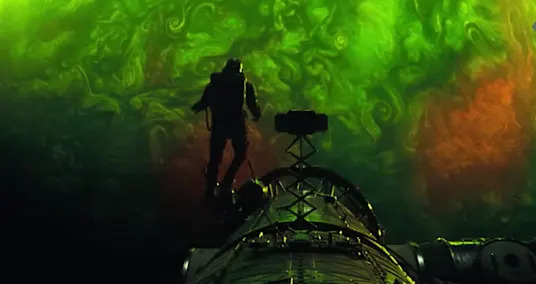
In the new film "Project Hail Mary", humanity sends an interstellar ship to another star system — Tau Ceti — in a last-ditch effort to save Earth from an alien threat. As it turns out, the key to rescuing our planet is a microbe that evolved on a world orbiting this star.
But how likely is it that the Tau Ceti system actually harbors alien organisms? And out of the thousands of planets discovered in other solar systems, how do researchers determine where to look for life?
A new study published in the Monthly Notices of the Royal Astronomical Society aims to help answer those questions. The paper's authors homed in on the 45 known exoplanets most likely to host life. And they highlighted which techniques astronomers can use to find more.
Astronomers usually find exoplanets using the “transit method”, where they measure how much a star dims when a planet passes in front of it. The larger the planet, the greater the dimming. The other major way to look for exoplanets is by measuring their host stars' "wobble." Planets exert a gravitational pull on their stars, like a dog straining on a leash, explains Lisa Kaltenegger, an astrophysicist at Cornell University and lead author of the new study. The closer the planet and the smaller the star, the more noticeable the wobble.
Scientists have discovered more than 6,000 exoplanets to date, but the majority of them are probably sterile worlds. Most are what are known as "hot Jupiters" — essentially massive, gaseous planets orbiting extremely close to their star.
The fact that we’ve found so many doesn’t necessarily mean that hot Jupiters are more common than other types of planets; it could be that they're just easier to spot. But scientists agree that these worlds make poor prospects in the search for life. The new paper proposes that researchers are more likely to find potentially habitable worlds by looking for smaller, cooler stars, around which rocky planets are easier to see.

To be considered a candidate for life, a planet needs to meet two criteria: it must have a rocky surface, and it must fall within the so-called “habitable zone” — the orbital distance at which liquid water can exist.
Unfortunately, since the book version of Project Hail Mary was published in 2021, scientists have determined that Tau Ceti probably doesn’t have planets in its habitable zone after all. That’s good news for humanity, Kaltenegger jokes, because it means the sun-munching astrophage couldn’t have evolved there.
But if we were to build an interstellar ship to look for life, where should we send it? According to Kaltenegger’s team, there are a couple of prime candidates. The first is the TRAPPIST-1 system. Discovered in 1999, this small red star has no fewer than seven rocky planets in its habitable zone. It is currently an area of interest for the James Webb Space Telescope.
A lesser-known star spotlighted in the study is called TOI-715. This red dwarf is orbited by a “super-Earth” three times the mass of our own planet called TOI-715 b, which sits comfortably in its habitable zone. However, this system is 139 light-years away, making it a bit far even for a future interstellar ship.
Much closer is Proxima Centauri. At just 4.25 light-years from us, it’s just a cosmic stone’s throw away. This system also hosts an Earth-like planet in its habitable zone.

In addition to the 45 planets in the habitable zone, Kaltenegger and her colleagues identified 24 more in the margins of habitability. "We call them 'planets on the edge,'" she says. “They’re the most interesting ones.” These worlds may not circle their stars at a distance that allows for liquid water, but that doesn’t necessarily mean they’re devoid of life. In "Project Hail Mary", we meet the friendly alien Rocky, who comes from a planet that is (ordinarily) devoid of liquid water. Like Rocky's home world, some of these planets may be home to life that has figured out how to get by without H2O.
For Kaltenegger, the search for life beyond Earth necessitates out-of-the-box thinking. We should focus our resources on the places most likely to host life, but if we keep our search too narrow, we risk missing out on potentially incredible discoveries. Take a page out of Project Hail Mary's playbook, she says: "Creativity and imagination, I think, are just pillars of science."

A lone astronaut must save the Earth from disaster in this propulsive, cinematic thriller full of suspense, humor, and fascinating science.View Deal
latest_posts
- 1
 In the stomach of a mummified wolf pup, scientists find DNA from a woolly rhinoceros
 - 2Unusual 'ingredients' helped stars form in a galaxy near the Milky Way
- 3Defence chiefs of Thailand and Cambodia to discuss ceasefire
- 4Why are NASA's Artemis astronauts wearing orange? What are they bringing to space? What to know about the preparation for their moon mission.
- 5Day to day Temporary Positions That Compensate Fairly in the US



- NASA's Artemis II launch leaves Americans in awe: 'We're going back to the frickin' moon!'
- Tributes pour in for James Ransone, 'The Wire' actor who died at 46
- Smartwatches: Remain Associated and Dynamic
- Exploring the Difficulties of Beginning a Family: Individual Experiences
- Hezbollah uses ambulances, paramedic uniforms, as disguise for terrorist activity, IDF says
- Administrative building in Sharjah region targeted by Iranian drone, UAE authorities announce
- Vote in favor of Your #1 Home Exercise Gear: Execution and Comfort Matter
- Supreme Court case about ‘crisis pregnancy centers’ highlights debate over truthful advertising standards
- How is 'A Knight of the Seven Kingdoms' connected to 'Game of Thrones'?